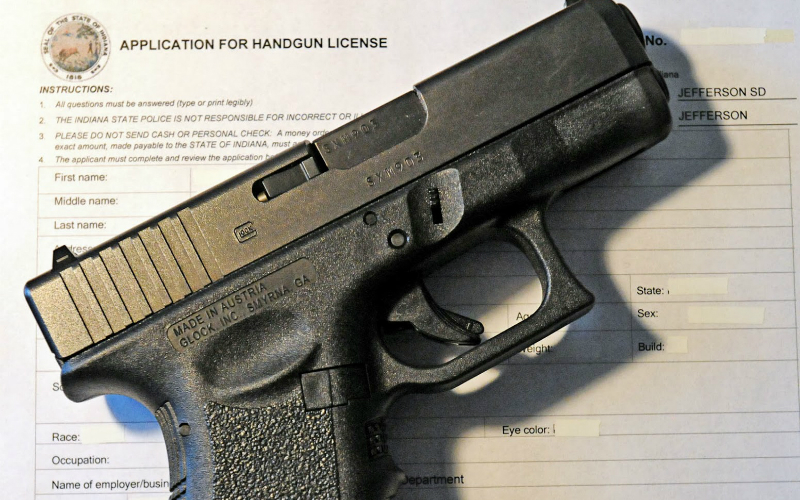



The high court’s 9-0 opinion last week in United States v Hemani favored Ali Hemani, a Texas man arrested in 2022, who had won his legal challenge in lower courts before the federal government appealed to the Supreme Court.
Hemani was facing up to 15 years in prison for owning a firearm, and possessing marijuana in his home, but the Supremes struck down the federal law that makes it a crime to be an “unlawful user” of a controlled substance and also own a firearm.
The 19-page majority opinion was written by Justice Neil Gorsuch. .
Exploring Thomas’s separate opinion on American Family Radio, show host Jenna Ellis and guest Mike Donnelly said Justice Thomas is urging the high court to curtail the power of Congress that is given to it through the Commerce Clause.
Found in Article 1, Section 8, Clause 3, the Commerce Clause grants Congress the power to “to regulate Commerce with foreign Nations, and among the several States, and with the Indian Tribes.”
Reading from his opinion, Ellis quoted Thomas’ legal argument that Congress “lacks the power to regulate the possession of firearms solely on the ground that they crossed state lines at some point in the past."
Donnelly, a constitutional attorney and legal analyst, said the Commerce Clause is a hotly debated topic in legal circles and in the courts.
“It’s not really a new debate. It's actually a very old debate,” Donnelly advised. “It goes back a long way, and for decades and decades.”
Over the years, Congress has used the Commerce Clause to establish a federal minimum wage, for example, which was upheld in a 1941 Supreme Court ruling. Other examples of Congress exercising its authority are environmental laws, food safety laws, and work safety laws.
Even passage of the historic Civil Rights Act, which banned Jim Crow-era discrimination against blacks, was based on the Commerce Clause.
Because Congress has used the Commerce Clause over the years to increase the power of the federal government, Donnelly advised that section of the Constitution has become one of the “most litigated” portions in the historic document.
Donnelly, who believes Congress enjoys too much authority under the Commerce Clause, said the high court has curtailed its power and authority of the years but has done so slowly.
“Not quick enough for me in any shape or form,” he told Ellis.
In the United States v Hemani case, Donnelly explained, Thomas was attempting to use the issue of a federal law regulating firearms and state boundaries to question the federal power handed to Congress under the Commerce Clause.
“Does Congress get to regulate anything just because it travels in interstate commerce at some point in time?” Donnelly stated. “That's a question that Thomas is asking. It's a question we've asked over the decades time and time again.”