



The island nation, which sits 90 miles from China’s coast, has operated independently since 1949 when military general Chiang Kai-shek fled there to escape Mao Zedong and his Communist army.
China also considers Taiwan to be the rightful property of China under its “One China” policy that states Taiwan is a renegade province that has never been recognized as a separate and independent government by the Chinese Communist Party.
Before departing for Beijing, Trump told reporters he expected to hear from China President Xi Jinping a demand that the U.S. president to backtrack on an arms sales agreement to provide $11 billion in military arms and hardware to Taiwan.
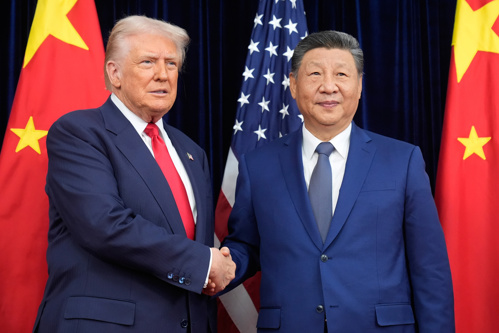 “President Xi would like us not to, and I’ll have that discussion,” Trump told reporters Monday.
That arms sale package, announced by the White House last December, will be the largest ever for Taiwan, The Associated Press reported.
Gordon Chang, an Asian policy analyst and longtime critic of the CCP, told American Family News the issue of Taiwan is always raised by the Chinese when they sit down with their U.S. counterparts.
“They'll want President Trump to show support for their position,” Chang said, “and he should absolutely not do that.”
According to the Associated Press story, there is concern among some national security analysts Trump will back away from U.S. support, politically and militarily, for Taiwan and its free government.
“I do worry that we have a transactional president and a transactional opportunity could arise, and then we would have a challenge,” Mark Montgomery, a retired U.S. Navy rear admiral, told the AP.
That concern comes from Trump’s unusual style of diplomacy and from an ambiguous U.S. stance on Taiwan’s independence that dates back to the 1970s.
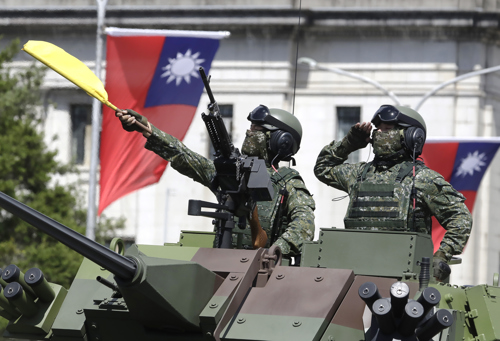 White House officials have countered that concern by pointing out President Trump’s commitment to military sales, including the $11 billion arms deal and the sale of $330 million in military aircraft parts that was approved last November.
On a related issue, there is concern in the Pentagon over China sabotaging vital undersea cables. Those cables, which are highly vulnerable, are used for everything from internet traffic to secure government communications.
China has sabotaged undersea cables used by Taiwan, raising fears that tactic could be used against the United States.
National security analyst Kirk Lippold, a retired U.S. navy commander, told AFN doing that to a vital U.S. asset is tantamount to an act of war.
"I think the president needs to be crystal clear, if they choose to engage in that activity, we are going to respond," Lippold said.