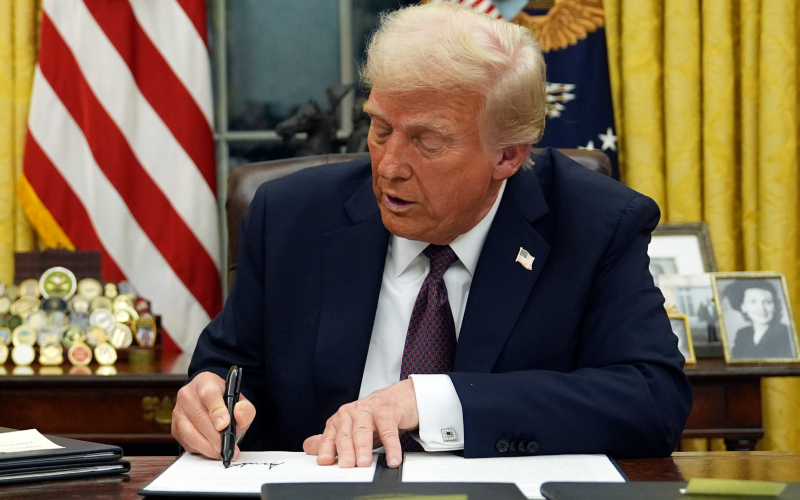



Trump confidence that a deal is near comes just days after he insisted that his administration and Tehran had " largely negotiated" a settlement but with the negotiations still in a state of flux.
The president is looking for a settlement that will reopen the Strait of Hormuz and provide him a credible argument that Iran's nuclear capability has been diminished enough to declare victory, winding down a conflict that's been politically unpopular for Republicans.
While Trump insists a deal is within reach, there appears to be daylight between the U.S. and Iran on several key issues. The president is also facing scrutiny from Republican allies, including Sens. Roger Wicker of Mississippi, Lindsey Graham of South Carolina and Ted Cruz of Texas, who have said the terms seem too favorable to Tehran.
They're balking at aspects of the deal that have emerged publicly that they say too closely resemble the nuclear agreement reached with Iran by Democratic President Barack Obama, which Trump scrapped during his first term.
Under the potential deal, Tehran would agree to give up its stockpile of highly enriched uranium — a key Trump demand — in return for sanctions relief. That's according to two regional officials and one senior Trump administration official, all of whom spoke on the condition of anonymity to discuss the sensitive negotiations.
One regional official, with direct knowledge of the negotiations, said how Iran would give up the uranium would be subject to further talks during a 60-day period. Some would likely be diluted, while the rest would be transferred to a third country, the official said.
Another key issue unresolved is whether the ceasefire will also cover Israel’s operations against Hezbollah, the Iranian-backed terrorist group in Lebanon. Iran has insisted that Lebanon must be covered by any ceasefire agreement negotiated with the United States.
The administration appears to leave some wiggle room on the Lebanon question. The emerging memorandum of understanding calls for a ceasefire between the U.S. and its allies against Iran and its proxies, such as Hezbollah, but also underscores Israel's right to act against imminent threats and in self-defense.