



For decades, going back to the 1970s, it seemed like a running joke: Scientists would make some dire prediction, and it would never come to pass.
There was the "population bomb" prediction, which warned of mass starvation from scarce resources.
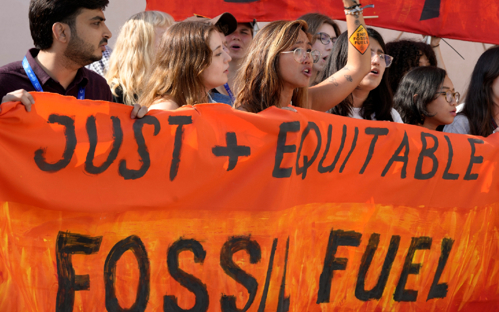 Before scientists in the 1990s said gas-guzzling SUVS are killing the planet, their predecessors predicted an "Ice Age" was coming that would freeze us all.
More recently, UN scientists predicted rising sea levels would swamp entire coastal cities by the year 2000.
The catastrophic predictions have been likened to "End Times" theology in the Bible, and the most loyal climate activists seem to have ignored, or explained away, why the most dire warnings didn't happen.
In May of this year, however, UN climate scientists backed away from their most catastrophic models described in the IPCC, the Intergovernmental Panel on Climate Change. That meant predictions of rising sea levels, and global crop failures, and even extinction-level scenarios, were scrapped.
I n the journal Geoscientific Model Development, climate researchers wrote:
For the 21st century, this range will be smaller than assessed before: on the high-end of the range, the high emission levels (quantified by SSP5-8.5) have become implausible, based on trends in the costs of renewables, the emergence of climate policy and recent emission trends.
According to a related Fox News story, President Donald Trump mocked the UN announcement after he had called climate change a "con job" in front of the U.N. General Assembly last September.

Now that the so-called climate crisis is never going to happen, Daniel Turner, founder and executive director of Power the Future, told Fox Business the damage the lie caused was apocalyptic.
“There are whole countries that destroyed their economies, right? We have entire nations that have crippled themselves and made themselves energy poor because of climate change,” Turner states.
David Legates, director of research and education at the Cornwall Alliance, says the worst may be yet to come. He points to anxious young people, who were taught and believed the apocalyptic warnings, and put off starting families of their own. That has led to the feared “demographic winter,” where birth rates are dangerously south of what’s needed for replacement.

“Telling everyone that the future is dire because of climate change, and that we’ve got to make energy so expensive people can’t afford it, those kinds of statements generally keep people from having children,” Legates states.
One of the most prominent climate activists is Greta Thunberg. Her famous "how dare you" speech, in 2019, opened a UN Climate Action Summit with a speech that accused adults of "stealing my dreams and my childhood" by failing to stop climate change.
Thunberg was 16 years old at the time.
None of the climate activism was an accident or even bad science, Legates says. It was always a ploy to enact global socialism.
“We take the wealth from the rich nations, we move them to the poor nations by way of the United Nations, which essentially becomes the clearinghouse,” Legates complains.
“You think that these conferences on climate change are really about fixing the climate. It's about changing the way we do economics. It's not about the climate. It never was," he insists.
Thunberg, who is now 23, was recently interviewed in France, where she has joined the street protests there.
"The whole world is watching with awe for these students who are fighting back," she told The Associated Press. "They are reclaiming the future that has been taken away from them."