



Anthropic has reportedly held a series of private meetings with religious scholars, philosophers and religious leaders, including the Vatican, to help determine how its artificial intelligence (AI) system should behave.
During the meetings, researchers discussed whether AI could someday be conscious and showed participants examples of Claude appearing to have emotions. They also asked scholars from Catholic, Jewish, Sikh, evangelical and other backgrounds to share ideas about morality, virtue and making good decisions, which helped shape an 84-page guide for Claude.
Though he was asked to sign nondisclosure agreements and keep the conversations confidential, Rabbi Mois Navon tells The New York Times the research and technology company was trying to convince him and the other religious leaders that Claude has a soul.
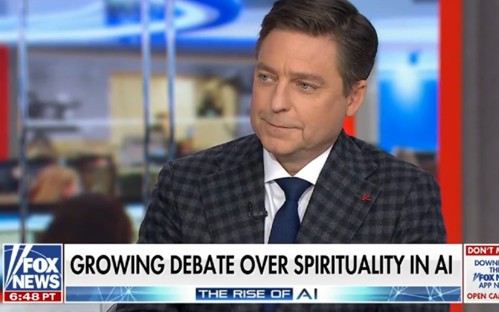 As Fox News contributor and theologian Jonathan Morris (pictured right) explains, that would give it special rights.
"What is unique about a being with a soul? They have rights," he noted earlier this week. "They have responsibilities. And if you start giving AI mechanisms rights, who are we to say that we can make them suffer or alter them?"
Bob Maginnis, an author and expert on the national-security implications of advanced technology, says AI agents do not have souls in the spiritual sense, but if Anthropic were to convince a court that they do, then a red line will have been crossed.
"I'm afraid if we're not careful that our courts will begin to be sympathetic to that view," he tells AFN. "People are coming to believe that they are more than just a machine."

Calling that "incredibly dangerous," he says it is easy for the spiritually uninformed to be confused about the issue.
"These people that converse, talk, become very familiar with these AI models see them as having personality," Maginnis relays.
Noting that each of his various devices has different voices, idioms and personalities, he says granting them human rights would be disastrous.
"Does that mean that they can sue someone?" he poses. "Does that mean that you can't terminate them, in other words, cut the power off to them? Are they going to have human rights?"
Maginnis reiterates the debate over whether AI can have a soul is no longer merely philosophical but could eventually have serious consequences for human rights and the law.