


More than three million pages of documents, along with videos and images, have been released by the federal government in connection with convicted sex offender Jeffrey Epstein and his network.
However, it’s the U.K., not the U.S., which has taken decisive action against individuals allegedly affiliated with Epstein.
Over the weekend, The Guardian published an article headlined “Tale of two nations: Andrew’s U.K. arrest highlights U.S. passivity on Epstein files.”
It notes the immediate reaction of the British police to arrest the former prince, Andrew Mountbatten-Windsor, after allegations arose that he gave Jeffrey Epstein confidential information. Meanwhile, “the Epstein class” in the U.S. has faced little if not any legal action.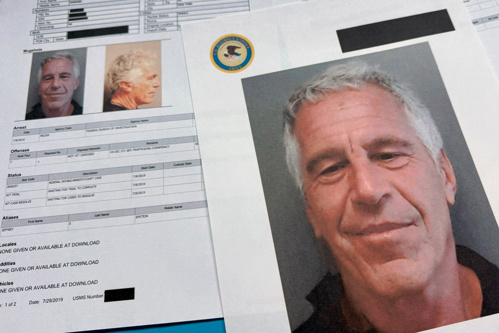
The only arrest and conviction in the U.S. in regard to the files is Ghislaine Mazwell, the ex-girlfriend accomplice and of Epstein. The U.K., however, also arrest recently arrested Peter Mandelson, the former U.K. ambassador to the U.S, after his ties with Epstein were revealed. Mandelson was forced to resign from positions with the Labour Party and House of Lords.
According to the New York Times, in the U.S., there have been consequences for individuals in business and academia but only two in politics – George J. Mitchell, a former Senate majority leader, who resigned his position from the Mitchell Institute, which provides college scholarships to students from Maine, and R. Alexander Acosta, the former labor secretary.
The Mitchell Institute’s board said the Institute would consider changing its name. Mitchell resigned earlier this month.
Alexander resigned in 2019 amid outcry over his handling of Epstein’s sex crimes case in 2008. Alexander was a federal prosecutor in Florida at the time.
Overseas impact
In foreign politics there have been eight resignations and one criminal charge, The Times reports.
Gerard Filitti, senior counsel at The Lawfare Project, spoke with Jenna Ellis on her American Family Radio morning show. He says that it’s a “little bit troubling” that more action has been taken in the U.K. than in the U.S., but not without reason.
“In England, the cases seem to be more straightforward or breach of trust cases,” explains Filitti. “They're essentially cases alleging that two people in public life — former Prince Andrew and Lord Mandelson — were providing information to Epstein that violated the trust that was placed in their positions.”

He says that evidence of this was clearly seen in released emails, giving police enough probable cause to investigate and arrest these individuals.
In that case, he asks what investigations in the U.S. might be similar?
“We've been very preoccupied about — and rightly so — about the horrific sex crimes, but there are plenty of things in the Epstein files here that could suggest investigations and prosecutions of other individuals for corruption charges too,” states Filitti.
He believes that the U.K. is also looking at the files more objectively than the U.S.
“What’s different in the U.K. is that they don't have the distraction of finger pointing about the files themselves. In the U.K., you're looking at this is what's actually been released and what's actionable here,” says Filitti.
Meanwhile, he explains that the U.S. is focusing more on the mechanism of the documents and dealing with the political dimension of actually releasing them.
“We're spending a lot of time arguing about whether the documents are being released quickly enough, whether the documents are redacted enough or not enough, and why is it taking so long,” says Filitti. “Instead of the actual contents, all the political wrangling has been should the files be released and which of the files should be released instead of looking at what's actually in the files that is actionable.”
He adds that prosecutors do not know where to start as there are so many offenders on both sides of the political aisle. They may be treading lightly after conservatives’ claims of weaponization of government resources by the previous administration.
“If we're speaking about a politicized justice system when it comes to targeting Donald Trump or his actions, imagine what the claims will be when we start seeing political figures charged with crimes here in the United States. It'll be it'll be a mess,” says Filitti.
Justice takes time
He also addresses the criticism of the Department of Justice and Pam Bondi for not fully addressing the files. He puts the blame on conflicting obligations in preparing to disclose the files, which takes a lot of work and time, verses actually investigating them.
“I think this idea of releasing all these documents immediately, that's the problem. There should not have been an artificial deadline, and that would have freed up Justice Department resources. That would have freed up Pam Bondi to actually investigate the more meaningful crimes that can be prosecuted and take action on them,” states Filitti.
In the meantime, he does think that there are things not quite as high profile that can be latched onto as a starting point. He assures that, in regard to statutes of limitations, the sex crime charges and the trafficking charges are not bound and can be prosecuted years after the fact. Starting with more recent and different crimes, he says, is a good way to gain momentum.
“I'll give you one concrete example: Epstein may have bribed customs and immigration officials in the Virgin Islands based on the email,” informs Filitti. “That's a good starting point. Those are not political figures. That's a prosecution or an investigation that could take place and promptly.”