


(The following was adapted from the congressional testimony delivered by Family Research Council President Tony Perkins at the May 20 hearing “The Southern Poverty Law Center: Manufacturing Hate” before the House Judiciary Committee.)
Americans once associated the Southern Poverty Law Center with fighting the Ku Klux Klan during the civil rights era. That reputation gave the SPLC enormous moral credibility. But in November 2010, SPLC shifted its focus beyond violent groups and began targeting Christian organizations opposing efforts to redefine marriage and human sexuality. Family Research Council was among the most prominent of that first wave.
In August 2012, FRC joined Governor Mike Huckabee in supporting Chick-fil-A Appreciation Day after the company was boycotted because its leadership publicly affirmed natural marriage. Two weeks later, on August 15, LGBT activist Floyd Corkins entered FRC headquarters here in Washington carrying a 9mm pistol, 50 rounds of ammunition, and 15 Chick-fil-A sandwiches. According to his later confession, his intent was to kill as many as possible and stuff the sandwiches in our mouths.
As he entered the building and pulled his gun, our building manager, Leo Johnson, confronted him. Though seriously wounded, Leo stopped the attacker and prevented a mass casualty event. After multiple surgeries and rehabilitation, Leo returned to work and remains today, affectionately known as Leo the Hero.
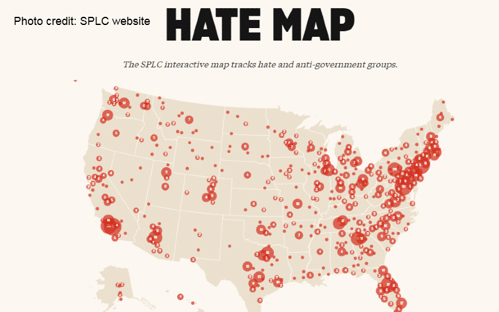
The following day, investigators confirmed that Corkins confessed to selecting FRC because of the SPLC website and hate map.
Following the attack, FRC appealed to the SPLC to remove mainstream Christian organizations from its inflammatory classifications. Those requests were rejected.
The attack has cost FRC more than $6 million in security-related costs. But the costs extend beyond the one act of violence.
Over time, SPLC’s “hate” labels and Intelligence Project became deeply influential as banks, payment processors, and technology companies increasingly relied on SPLC classifications to decide which organizations could maintain accounts, process transactions, or operate online.
 Around 2016, the SPLC began pressuring corporations and technology companies to de-platform and defund organizations it labeled extremist.
Then came Charlottesville in 2017.
According to the recent federal indictment of SPLC, a member of the online leadership that planned the “Unite the Right” rally at the direction of the SPLC, and helped coordinate transportation for attendees, was bankrolled by SPLC. Charlottesville was a catalytic event for SPLC, as major corporations like Apple and JPMorgan Chase aligned with SPLC, contributing millions of dollars.
Shortly afterward, the coalition known as “Change the Terms,” led by the SPLC and the Center for American Progress, established standards that would encourage technology and financial companies to deny digital access and financial infrastructure to organizations the SPLC labeled.
The timeline of Change the Terms closely parallels the acceleration of efforts to debank and deplatform conservative and Christian organizations. FRC experienced this from Truist Financial, Fidelity Investments, GuideStar, Mobile Cause, and other technology-related companies. SPLC officials openly acknowledged this strategy before Congress in January 2020. SPLC official Lecia Brooks stated: “We have lobbied internet companies, one by one… A key part of this strategy has been to target these organizations’ funding.”
Brooks continued to describe the coordinated effort to pressure technology companies and financial institutions to restrict access for organizations they opposed.
The issue before this committee is larger than FRC or any one organization.
In America, citizens should not lose access to banking services, digital platforms, public credibility, or physical safety because they believe in biblical teaching on marriage and human sexuality. When government-regulated institutions can apply ideological labels in a coordinated fashion to silence, isolate, or financially cripple opponents, we allow political targeting by proxy, and freedom is at risk.
SPLC was the hub, but there were many spokes that made up this wheel designed to crush Christians and conservatives — the congressional inquiry should not stop with SPLC.
Notice: This column is printed with permission. Opinion pieces published by AFN.net are the sole responsibility of the article's author(s), or of the person(s) or organization(s) quoted therein, and do not necessarily represent those of the staff or management of, or advertisers who support the American Family News Network, AFN.net, our parent organization or its other affiliates.