




The Pentagon’s earlier announcement that it intended to livestream the execution of Nidal Malik Hasan reopened an important debate about the death penalty. President Donald Trump has now canceled the livestream but says Hasan will die by firing squad on December 3.
Hasan was convicted of killing 13 people and wounding 32 in the 2009 Fort Hood shooting. The execution will take place at Fort Hood.
I believe the death penalty is biblical and morally justified. But believing that the state may carry out a just sentence does not mean we should celebrate a person’s death as a victory. And it certainly does not mean we should turn an execution into public entertainment.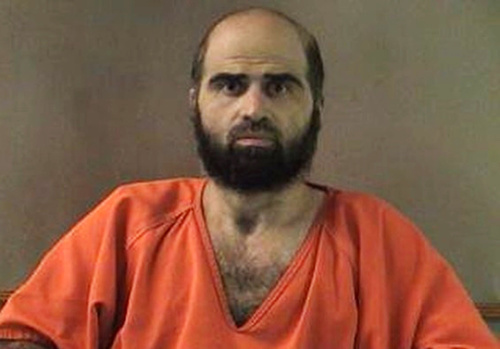
Scripture takes human life seriously because human beings bear God’s image. In Genesis 9:6, God establishes a principle of accountability for the taking of human life. Romans 13 describes civil authority as a servant of justice, bearing the sword to punish wrongdoing. These passages do not license private vengeance or cruelty. They recognize that government has a duty to restrain evil and administer justice.
Justice matters because the lives Hasan took mattered. A lawful sentence of death, imposed after conviction and review, can be a fitting punishment for murder on this scale. The point is not that Hasan’s death can undo the deaths of his victims. Nothing can. The point is that a society must answer grave evil with serious, proportionate justice.
But a sentence can be just while the way we carry it out can raise a separate moral question.
We don’t need to see everything
The Pentagon said the livestream was intended to show that there are serious consequences for such crimes. Yet a broadcast does more than make a sentence visible. It turns the moment of death into a consumable image, available to anyone with a screen. It’s creates a feel of “let me get my popcorn.” If the goal is to affirm justice, why should the public watch the execution itself?
In an age shaped by Netflix true-crime series, endless streaming and viral clips, we have lost a measure of justice to entertainment. True crime can help people understand cases and remember victims. But it can also package real suffering as suspense and content: another episode, another shocking detail, another death to watch from the comfort of a couch. We become callous and desensitized as a society. A livestreamed execution risks carrying that into the mainstream sentiment. The state would not merely announce that justice had been carried out; it would invite an audience to witness a killing.
The public has a legitimate interest in how government exercises its power. Transparency matters, especially when the state imposes its most severe punishment. But transparency does not require broadcasting every intimate detail in an irreversible act. There is a difference between public accountability and public spectacle.
The Pentagon said livestreaming the execution will show that serious crimes have serious consequences. But America has tried public executions before, and they often became spectacles: the 1936 hanging of Rainey Bethea in Kentucky drew thousands and was described as having a carnival atmosphere. Today, the scale and permanence are even bigger. A crowd eventually left the square; a livestream could reach people anywhere, be replayed, clipped and shared, turning a state execution into another piece of content in a culture already accustomed to consuming real crimes as entertainment. The public can know that justice has been carried out without watching a person die.
There is also a difference between remembering the victims and fixating on the killer’s final moments. The Fort Hood victims deserve to be remembered for their lives, their service and the families and communities they left behind. Their deaths should not become a dramatic prelude to a government broadcast. A camera trained on Hasan’s execution would make his death the central image. That is a strange way to honor those he murdered.
Secretary of War Pete Hegseth and others have also argued that watching an execution could deter future crimes or make the consequences of murder unmistakable. But the Pentagon has not shown why a livestream is necessary to achieve either purpose. A visible sentence and a televised death are not the same thing. The first communicates the judgment of the law; the second risks feeding curiosity about and fixation on violence.
The condemned deserve dignity
A Christian defense of capital punishment should not become a defense of cruelty. The death penalty is not an opportunity to gloat or celebrate. The authority to punish does not erase the dignity that belongs to every human being, even a guilty one. If we believe the state may take a life as justice (as I do), we should insist that it do so soberly, with restraint and without degrading the act into a spectacle or the latest reality TV episode.
President Trump was wise to cancel the livestream. The execution itself, if carried out, should be understood as the grave conclusion of a legal process: justice rendered for a monstrous crime. It should not be marketed as a show. A nation confident in the justice of its laws does not need to invite the world to watch a person die.
Notice: This column is printed with permission. Opinion pieces published by AFN.net are the sole responsibility of the article's author(s), or of the person(s) or organization(s) quoted therein, and do not necessarily represent those of the staff or management of, or advertisers who support the American Family News Network, AFN.net, our parent organization or its other affiliates.