


Military Spouse Appreciation Day, observed today, as Mother’s Day weekend begins, serves as an opportunity for citizens to recognize the invaluable contributions, support, and sacrifices of Armed Forces spouses.
For Felicia Engelhard, whose husband has served in the Army for over twenty years, the most significant acknowledgments — and a cause for celebration — would be for the Department of War to recognize the hardships families endured due to the 2021 COVID-19 shot mandate, complete a thorough investigation of the illegal actions taken, and pursue full accountability.
She explained to American Family News that despite the rescinding of former Defense Secretary Lloyd Austin’s (shown right) mandate in January 2023 and its classification as “unlawful as implemented” across all military branches in May 2025, the repercussions of the strict enforcement of the shot mandate continue to inflict long-lasting psychological and financial distress on many military families.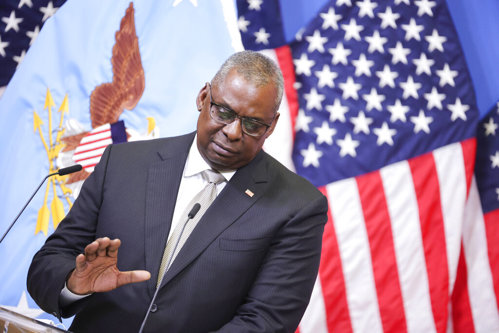
Mara Macie, the spouse of Ted Macie, a retired Navy Medical Service Corps officer who also fought against the shot, agreed. “The actions taken during the mandate and the subsequent fallout greatly affected both service members and the families,” she explained. “For those new to service, it set an image of ungratefulness, and for those of us who were part of the military community for close to a full career, disillusionment and abandonment became our world.”
Like Macie, Engelhard felt a profound sorrow and sense of neglect as she witnessed thousands being discharged from military service for their lawful, often faith-based, refusal to receive the injection. She stood beside her husband, feeling the weight of his struggle to preserve his career, a battle that threatened to extinguish the hope and values they once held dear.
“This is something that is still difficult to deal with and has caused extensive psychological damage resulting in trust issues in all facets of life,” Macie continued. “One moment you feel like you are a part of something, that you have strong alliances and a community, and the next you are dispensable and unimportant. The struggle to feel normal, form new relationships, to maintain current relationships, and be able to trust again is very real.”
The meaning of the flag
Engelhard is also acutely aware of such challenges. Interestingly, as the country nears its 250-year anniversary, she draws motivation from her disappointment within the framework of the U.S. flag.
“My husband has a United States flag on each of his uniforms,” Engelhard shared. “At an Army funeral, when a soldier’s service concludes, a military representative presents a flag to the bereaved family, stating: ‘On behalf of the President of the United States, the United States Army, and a grateful nation, please accept this flag as a symbol of our appreciation for your loved one’s honorable and faithful service.’”
While her own husband managed to continue to serve in the Army, Engelhard questioned: “How many others like him have also served honorably and faithfully, only to experience a nation so ungrateful that it would strip away that symbol and make a mockery of what it stands for because of an experimental shot?”
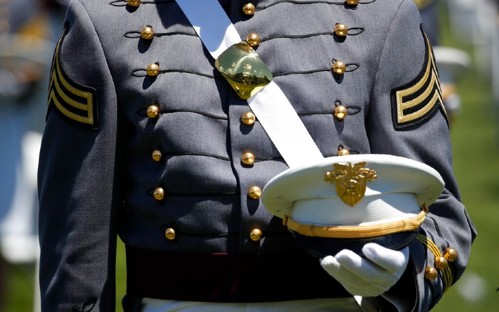 “The red symbolizes courage and sacrifice — an eagerness to risk one’s life and forfeit everything else in service of others’ interests,” she explained passionately. “The white represents purity — an adherence to one’s beliefs and the foundational ideals of our country.” She continued, “The blue symbolizes vigilance and perseverance — an eagerness to remain alert for potential threats to our nation and to maintain strength when our freedoms and liberties are under attack.”
“Speaking of the service members who stood so strongly against the Department of Defense’s enforcement of the shot for ethical, efficacy, and religious reasons, and were subsequently kicked out, or forced out, of the military,” she said, “I challenge anyone to find a group of individuals more deserving to wear our flag than these men and women.”
Years later, it still pains Engelhard that between 2021 and 2023, approximately 8,600 or 8,700 military personnel were forcibly discharged for refusing the COVID-19 injection. Additionally, she pointed out the tens of thousands more who chose to leave the service on their own to avoid receiving the injection. “Many of these are shoes that will never be filled again,” she lamented.
For Macie, these service members were “betrayed,” stating, “There was no integrity and no defense of those who should have been defended.” Seeing others thrive while neglecting those who stood up against the shot and were often targeted for their actions is, she contended, “enough to make retreating from what caused all of that pain understandable.”
A wife's wish
Despite President Donald Trump signing Executive Order 14184 on January 27, 2025, to reinstate service members discharged for not receiving the COVID-19 shot, the reinstatement process has been painfully slow, with evident resistance from established leadership, she said.
“If I could wish for anything in the coming year, before next year’s Military Spouse Appreciation Day,” Engelhard admitted, “it would be to see accountability taken so that healing can begin within the U.S. Armed Forces and its families,” she stated. “The often-dismissed trauma that families have experienced alongside their service members should be acknowledged, and further action should be taken to treat the wounds inflicted upon our active and wrongfully separated service members and their families.”
Whether or not that day ever arrives, she and her husband lean on their faith, believing that true restoration requires a spiritual solution.