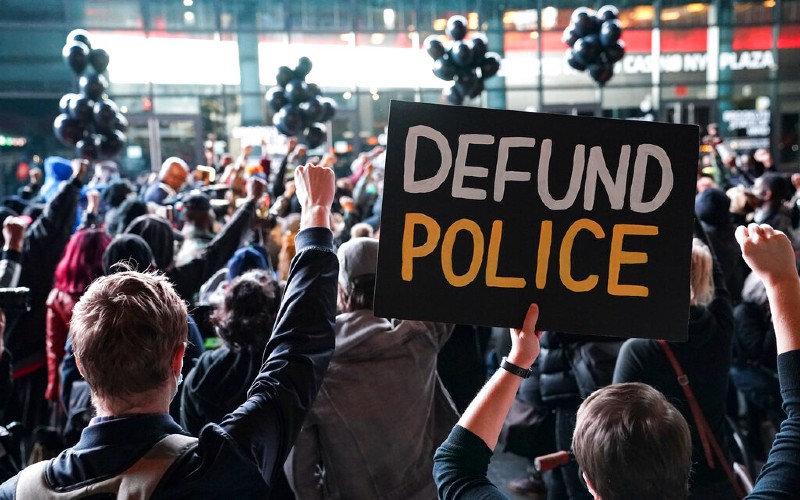


As street protests in Iran's cities near the two-week mark, the public backlash against the ruling ayatollahs is being described as different from previous demands for freedom from harsh Islamic rule.
This time there is also economic pressure to go along with social pressure, Gregg Roman, executive director of the Middle East Form, said on Washington Watch Tuesday.
From an economic standpoint, the gas on the fire came in late December when Iranian currency, the rial, plunged to historic lows. It is now trading at 1.4 million to every U.S. dollar.
 “I want to call it the perfect storm for Iranian seekers of freedom and democracy, and the most imperfect situation for those who they are protesting against,” Roman told show host Tony Perkins.
Iran’s failure to budge in negotiations with the U.S. last year, prior to the bombing of its nuclear facilities, is also coming home to roost. Tehran had a chance to halt its enrichment of uranium. Doing so would have gained Iran some relief from devastating international sanctions.
The problems worsened after Israel’s bombing campaign and the U.S.’s Operation Midnight Hammer. The rial lost 60% of its value against the U.S. dollar last summer. Inflation has since reached near 50%.
In the newest protests, more than 36 people have been killed, and more than 2,000 arrested, amid 285 demonstrations across the country, the group Human Rights Activists in Iran said late Monday.
Perhaps the most telling economic sign, Roman shared, is the shopkeepers strike at the famous Iranian grand bazaar. The same bazaar went on strike, back in 1979, he said, which was considered the "death knell" for the Shah's government.
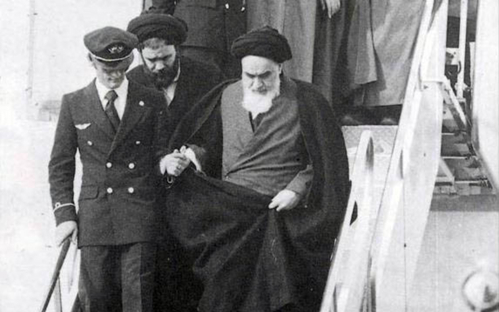 At that time, now nearly 50 years ago, Iranians protested against the Shah's autocratic rule and forced him to flee. What replaced the Shah was an exiled cleric, Ayatollah Khomeini (pictured at right), who returned to power and replaced the controversial, pro-Western monarchy with a theocratic Islamic government.
Iran's current Supreme Leader, Ayatollah Ali Khamenei, succeeded the previous ayatollah in 1989.
"The bazaar has gone on strike again 49 years later,” Roman said. “Simple shopkeepers, commercial merchants, truck drivers, even government workers who are now subsiding on an average salary of 100 a month, they can't even afford basic goods like milk, eggs and bread.”
Reports: Khamenei has escape plan
The regime’s ability to clamp down on protests has been weakened, Roman said.
Reports surfaced this week that Ayatollah Ali Khamenei has a contingency plan in place to allows him to flee to Russia – similar to former Syrian leader Bashar al-Assad -- if the current unrest escalates.
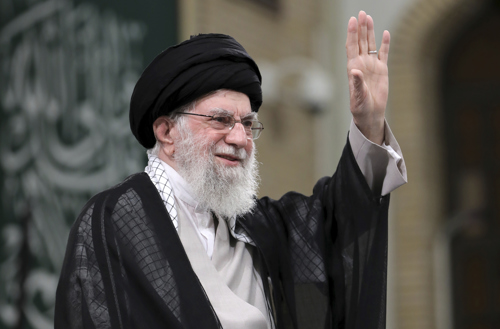 Close aides and family would join Khamenei on the run if the plan is enacted, The Times of Israel reports.
Operation Midnight Hammer sent an already struggling economy into a tailspin, Roman said.
“Shopkeepers couldn't even afford to buy these goods coming in from imports with overseas markets and decided to go on strike. Now the entire country in 30 out of 31 provinces has erupted into what we see now,” Roman said.
Amini's death kicked off previous protests
It’s a different day for the Iranian government than in the fall of 2022. That is when nationwide protests grew over the death of Mahsa Amini, a 22-year-old Kurdish Iranian. She died in police custody after being arrested by Iran’s “morality police” for allegedly violating rules for a loose-fitting hijab.
Longstanding anger over the repression of women bubbled to the surface. Protests spread to all 31 provinces, and though they were sustained, some lasting into 2023, they were led mostly by women and youth.
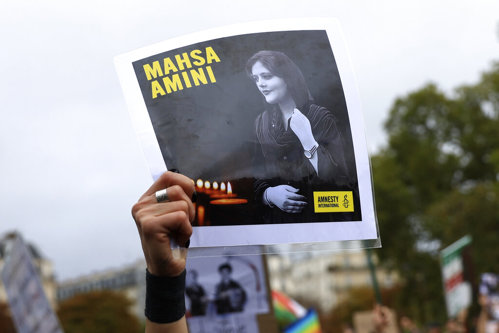 The government responded with overwhelming force. Estimates by human rights groups say more than 500 were killed with more than 20,000 arrested.
Now, four years later, the Iranian regime is not what it was.
“Not at all,” Roman said. “It’s not even the same regime it was six months ago prior to the Israeli-Iran war.”
After the Israel bombings, many Iranian women again began walking in public without the head covering required by law.
“In doing so the morality police didn't crack down because they knew that their ability to respond en masse to another freedom protest like three years ago -- when millions of Iranians came up because of the social issues -- would be weakened,” Roman said.
President Donald Trump, without taking military action, continues to affect the environment in Iran.
“Just by giving support to the Iranian protesters by threatening the Islamic Republic that if they violently respond to these protests the U.S. may step in not with boots on the ground but by protecting protesters’ lives with airstrikes or warfare, more economic disruption. That has really given a new wind of support in the sails of the Iranian protest movement,” Roman said.