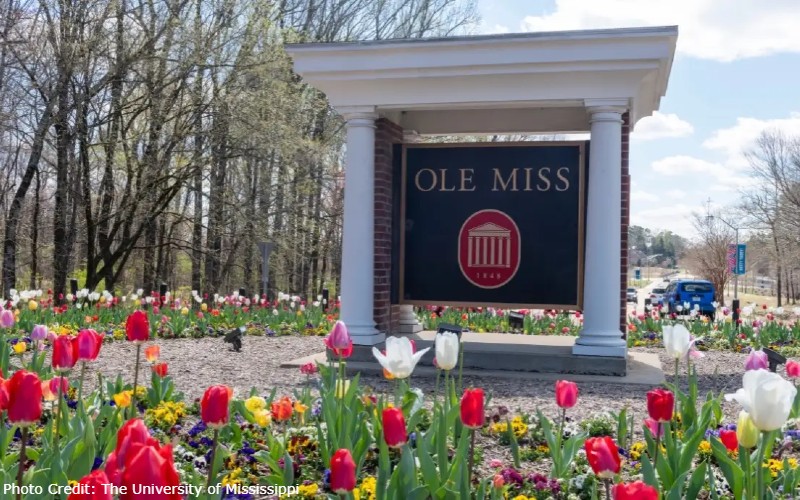



Two University of Mississippi students, 18-year-old Aidan Hamilton and 20-year-old Robert Strang, were found dead Monday, Sept. 21, in separate locations in Oxford. Authorities are investigating the deaths separately and have not determined whether they are connected.
Though packaged kratom was found at both locations, officials have not established that it caused or contributed to either death. Autopsies and toxicology tests are underway, and authorities say results could take several weeks.
Kratom (pictured above) is an herbal substance made from the leaves of a tree native to Southeast Asia. Its active compounds can have stimulant-like effects at lower doses and opioid-like or sedating effects at higher doses. It is commonly sold as powders, capsules, gummies or liquids, although the FDA has not approved it for medical use.
Other college-student deaths have been linked to synthetic or highly concentrated drugs this year, including cases involving fentanyl, counterfeit pills and kratom-derived compounds. A 19-year-old St. Edward's University student, for example, died from the combined effects of fentanyl and kratom compounds in June, while students in other states have died after unknowingly taking fentanyl-laced pills.
During a recent segment on the "Fox & Friends" program, Derek Maltz, formerly of the Drug Enforcement Administration (DEA), warned that the traditional ways of fighting the drug crisis are no longer enough.
"This is a chemical attack against our country, especially focused on the younger generation," he argued.

Maltz noted that global criminal networks are constantly outpacing law enforcement by altering chemical formulas faster than governments can schedule them.
"We've been playing whack-a-mole," he said. "These criminal networks can change the chemistry much quicker than the traditional systems that we have in America or around the world."
Describing the situation as a "tsunami of synthetic drugs" saturating the country, Maltz stressed that this is a non-partisan issue, and he demanded a complete shift in how culture approaches education and prevention.
"Mandatory education in every school in America: Why is that not happening?" he posed. "We're destroying our future generations with these synthetic drugs. What's more important than our future, our kids? Are we kidding each other? You can teach them math and English and chemistry, that's great. But if they're taking these substances and die, what good is it?"
Experts say getting ahead of these emerging compounds is critical before more lives are lost.