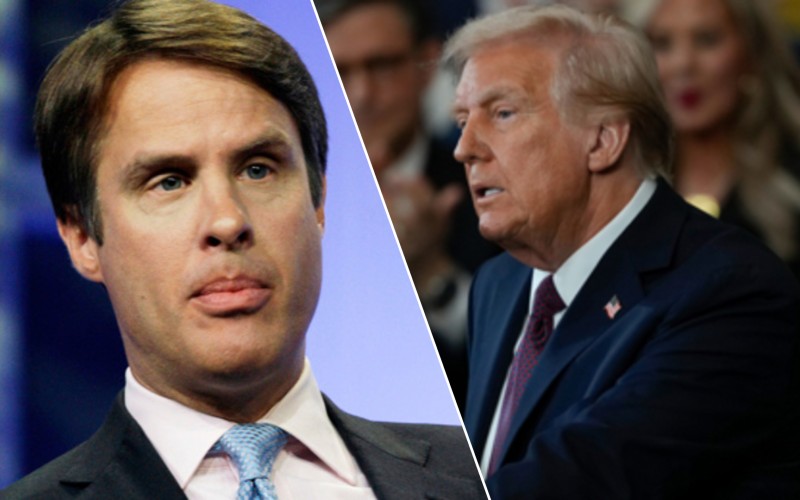



Accusing the Trump administration of launching a “retaliatory campaign” against its liberal programs, ABC filed a lawsuit this week against the Federal Communications Commission (FCC) in the U.S. District Court for the District of Columbia.
ABC, famous as one of the three original television networks, is currently owned by the powerful Walt Disney Co.
 The broadcast network is suing after the FCC, back in April, announced it is reviewing the renewal process for eight ABC-owned station licenses years before those licenses expire.
Discussing the lawsuit on American Family Radio, attorney Abraham Hamilton III said ABC and Disney claim they went to court over the First Amendment issue and government censorship.
“But if you actually look into what the FCC is looking into,” Hamilton advised, “they are querying Disney concerning their DEI policies.”
Backing up Hamilton’s claim, it is true that FCC Commissioner Brendan Carr fired off a letter about the DEI investigation to Bob Iger, the now-departed Disney boss. “Numerous reports indicate that Disney’s leadership went all in on invidious forms of DEI discrimination a few years ago,” Carr writes, “and apparently did so in a manner that infected many aspects of your company’s decisions.”
The letter is dated March 27, 2025, almost 1 ½ years ago.
NPR story doesn’t help Disney
Disney, the corporation that made Mickey Mouse a household name, reported $94 billion in revenue last year. It employs approximately 170,000 workers in the United States who earn a paycheck at its famous theme parks, ESPN, Hulu, Marvel Studios, ABC, and Lucas Films, among other Disney-owned companies.
The problem with that workforce, however, is that white employees, especially straight white males, are routinely overlooked when the human resources department puts DEI into practice.
NPR, the liberal media outlet, reported in a March 2025 story how Disney had “scaled backs its diversity efforts” by dropping controversial initiatives or by “softening” its language around DEI practices in its corporate offices.
 One of the Disney initiatives was to include “underrepresented groups” in its actors and its writing staffs, with a target of 50%. That “inclusion” would be reflected in the characters on the screen, the memo stated.
The NPR story also said Disney informed its employees it was replacing “Diversity and Inclusion” with a new slogan called “Talent Strategy.”
Before that retreat, however, Disney had gone all-in on DEI to the point that executives were rewarded for hitting quota goals in the workplace. Those goals were called "diversity metrics" within the corporation.
Hamilton, a former assistant district attorney, said the FCC is investigating Disney and other corporations for unfair practices in the workplace, but Disney knows it can spin that into something else.
“They know that they can win the PR. campaign,” Hamilton said, “by saying that this is nothing more than a First Amendment challenge, or this is a veiled effort to crush us because of viewpoint discrimination.”