






Last summer, the state updated its definition of gender expression to include chosen names and how someone chooses to be addressed.

Hal Frampton, senior counsel at Alliance Defending Freedom (ADF), says that creates a legal trap for business owners.
"The effect of that change was to force every business owner who wants to stay on the right side of the law to use a person's preferred names and pronouns regardless of their faith, regardless of their conscientious objections or any of that stuff," Frampton states. "Complete compelled speech. You must use these people's preferred names and pronouns, or you are violating the law."
Eric and Sara Smith run a family bookstore in Colorado. The Smiths filed a pre-enforcement challenge and argued before the 10th Circuit Court of Appeals last week for a preliminary injunction after a trial court said they hadn't shown a sufficient threat.
ADF is representing the Smiths in this case, known as Born Again Used Books v. Sullivan.
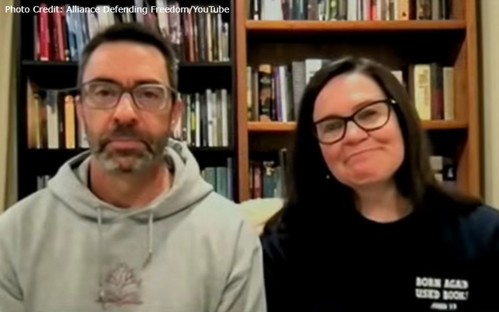
At a press conference, the owners said they welcome all customers, but draw a line on certain pronoun requests.
Sara Smith: "We believe that God has made each person male or female and that His design is good. When we greet a customer or introduce them to a co-worker, we speak in a way that is true to that belief. If someone asks us to use pronouns that don't match their sex, we politely decline and simply use their name."
Eric Smith: "Colorado now says that isn't allowed. Speaking the way we always have could cost us $3500 per violation and even time behind bars. For a family bookstore, penalties like that could close our doors for good."
The Smiths warned that violating the law could bring steep fines and even jail time, threatening to close their doors.
Frampton adds they aren't asking others to agree with them, just to speak in line with their faith.
"Free speech is for everyone. Eric and Sara aren't asking anyone to agree with them. They are simply trying to make sure that they are allowed to speak in accordance with their beliefs," Frampton says.


