



Attorneys representing Kirk's family requested that the trial take place as early as possible in 2027, specifically urging the court to set a start date no later than Oct. 4, 2027.
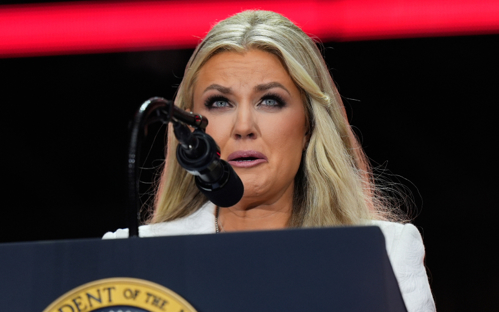 Kirk's widow, Erika, formally asked the court to enforce her family's right to a speedy disposition, arguing that the multi-year timeline prolongs their pain and creates significant emotional and financial uncertainty.
State prosecutors initially recommended a compromise date of Jan. 31, 2028, to avoid holding a high-profile trial during the Thanksgiving and Christmas holidays. Robinson's defense team, however, cited millions of files of digital evidence and scheduling conflicts in aggressively pushing for a date in late 2029.
Judge Tony Graf ultimately split the difference, ordering jury selection to begin June 21, 2028, and reserving 105 court days for the trial.
"The jury selection will begin June 21, 2028, at 9:30 in the morning," he announced Monday during an afternoon court hearing in Provo, Utah. "The court will hold monthly pretrial status conferences to protect the constitutional rights at stake."
Legal analyst and defense attorney Josh Ritter told Fox News Channel that "it'll be three years then by the time we're looking at a verdict, by the time from when Charlie was killed."
"Why they feel that they even need, as he said, 105 days for the trial itself, it really does seem to be overwrought," he added.
Why trial delays can favor the defense
A murder trial taking place three years or more after a crime is not unusual, given severe court backlogs, constitutional due-process requirements and the complexity of homicide cases. However, delays generally tend to favor the defense.
One reason is because over time, physical evidence can deteriorate, become misplaced or develop gaps in its chain of custody.
Additionally, the prosecution relies heavily on clear, consistent witness testimony, but human memory naturally fades or becomes muddled over time. That can make witnesses more vulnerable under cross-examination and give the defense additional opportunities to introduce "reasonable doubt."
Key witnesses may also relocate, become too ill to testify, die or lose their willingness to cooperate with law enforcement.
In high-profile cases such as this, intense public anger surrounding a crime can also diminish over several years. By the time jury selection begins, nearly three years after the crime in this case, public emotions may have cooled, potentially creating a less hostile environment for the defense during the jury-selection process.
Capital cases bring additional complexities; defense attorneys often need years to conduct background checks, investigate a defendant's medical and psychological history, and build a "mitigation case" aimed at convincing a jury to spare the defendant's life during the sentencing phase.
One significant disadvantage of prolonged pretrial proceedings falls on defendants who are held in jail without bail, as they must endure potentially years of incarceration before being convicted of a crime.
Robinson's legal team has explicitly waived his constitutional right to a speedy trial, allowing additional time to prepare his defense.
He faces a capital offense and is being held without bail.
The shooting and charges against Robinson
On Sept. 10, 2025, Kirk was kicking off Turning Point USA's "American Comeback Tour" at Utah Valley University. Approximately 3,000 had gathered at the outdoor rally to see him.
Kirk was in the middle of a back-and-forth exchange with a student about gun violence and mass shootings. The audience member had asked, "Do you know how many mass shooters there have been in America over the last 10 years?"
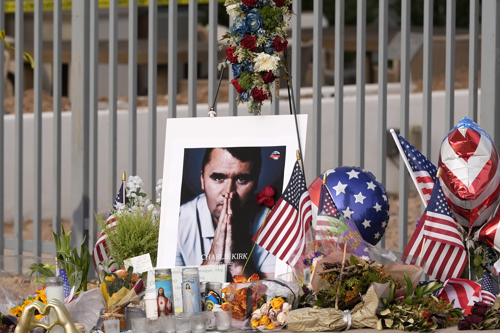 Kirk began his response with a clarifying question: "Counting or not counting gang violence?" when a single rifle shot rang out from a nearby campus rooftop. Eyewitnesses reported seeing massive bleeding from the left side of his neck before he went limp and slumped in his chair.
Members of his security team rushed him to Timpanogos Regional Hospital in Orem, where he was later pronounced dead.
Robinson faces seven criminal counts, including the central charge of aggravated murder. The judge upheld the aggravated designation, finding that the rooftop sniper shot knowingly endangered the larger crowd at the university rally. That designation makes Robinson eligible for the death penalty, life in prison without parole, or a prison sentence of 25 years to life.
He also faces five additional felony counts related to firing the high-powered rifle on a college campus and causing serious bodily injury or death; moving or hiding the bolt-action rifle used in the shooting; destroying or disposing of the clothing he wore during the crime; instructing his roommate and romantic partner to delete incriminating text messages; and directing his roommate to remain silent and not cooperate with law enforcement investigators.
Additionally, Robinson has been charged with the Class A misdemeanor of committing a violent offense in the presence of a child. The enhancement was added because children were documented in the immediate vicinity of the outdoor university crowd when the shot was fired.
Robinson has pleaded not guilty to all seven counts.