

One is in the hands of the Supreme Court right now. The other is just getting started.
The Supremes last month heard oral arguments on the consolidated cases of West Virginia vs. B.P.J. and Little vs. Hecok, which originated in Idaho.
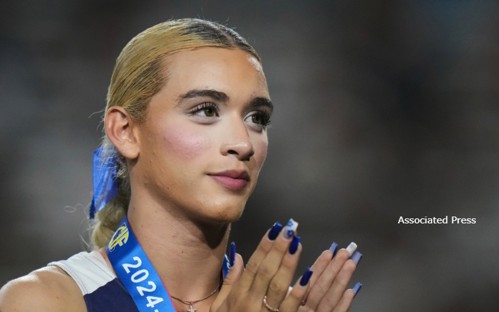
B.P.J. is a biological male student known as Becky Pepper-Jackson.
 These cases challenge state laws that restrict girls’ and women’s school sports teams to biological females only.
The free speech case involves well-known, Iowa-based radio and podcast host Steve Deace, a frequent guest on American Family Radio.
Sixteen state attorneys general, led by Iowa’s Brenna Bird and Texas’ Ken Paxton, on Tuesday sent a formal letter to YouTube and Alphabet -- its parent company -- executives demanding transparency in Deace’s ongoing complaints of “shadow-banning” by YouTube against his content.
Between 2020 and 2022, YouTube removed at least four of his episodes that criticized COVID-19 lockdowns, vaccines, and the 2020 election integrity.
No formal lawsuit has been yet field by the attorneys general.
The shadow-banning has continued beyond the window of original complaints by Deace.

“They’ve been doing it for five years,” David Hacker, an attorney with First Liberty, said Wednesday at the annual meeting of the National Religious Broadcasters.
Following these removals, Deace’s channel saw a sharp decline in views and impressions on YouTube, despite significant growth on platforms like Apple Podcasts, suggesting targeted suppression.
“We’re really excited because this brings the power of great states’ attorneys general coming after a major corporation, a major player in social media, and we’re hoping that will ultimately result in many Christian commentators not having their content shadow-banned by the Big Tech conglomerates,” Hacker said.
In the women’s sports case, key constitutional questions are does Title IX prohibit states from separating sports teams based on biological sex, and does the Equal Protection Clause of the 14th Amendment allow sex-based eligibility rules.
 In addition to West Virginia and Idaho, 23 other states have laws against biological males competing in girls’ and women’s sports.
Laws from three of those states – Arizona, New Hampshire and Utah – are involved in different levels of litigation right now.
The American Civil Liberties Union (ACLU) is the primary legal organization representing the biological males.
They argue the bans violate Title IX, the Equal Protection Clause and civil rights.
While sex discrimination is cornerstone of the ACLU’s case they struggled with the “what is a woman question?”
“The mic-drop moment in oral arguments was when the ACLU was asked to define what sex means under Title IX. You would think this would be an important issue because they brought a claim of sex discrimination. They did not want to answer that question. They couldn’t define what sex means, they couldn’t define what a woman is,” attorney Jonathan Scruggs, of Alliance Defending Freedom, told the NRB gathering.
 In oral arguments, the Court’s conservative majority appeared skeptical of challenges to the bans, while the liberal-leaning justices raised concerns about discrimination and the potential harm to transgender athletes, SCOTUSBlog.com reported.
A ruling is expected in June or July.
ADF contends that Title IX, the landmark federal legislation of 1972, was enacted to protect equal athletic opportunities for females.
It also argues that biological differences matter for fairness and safety in sports and that states have authority to maintain female-only categories for their athletics teams.
Failure to do so undermines the protections outlined in Title IX, the attorneys say.
Choose truth or choose a lie
But this case is about so much more than sports, Scruggs told NRB.

“It’s about truth. It’s a lie that a man can become a woman, and if you believe that lie, women and children will be harmed, and it’s going to have aftereffects not just on sports but on privacy, locker rooms, restrooms, women’s shelters, women’s prisons.”
It will also have aftereffects for the very foundation of the American law.
“It goes to this key fundamental issue: should laws be based on the truth in this country or should they be based on a lie?” Scruggs said.