


Capitol Hill hearings this week exposed how the FBI, during the Joe Biden administration, secretly targeted 92 Republican-linked political leaders or influential organizations.
The political spying operation had an official name, Operation Arctic Frost. That revelation was first reported by The New York Times, in late January, in a story that described the FBI going after Donald Trump. That story by the liberal newspaper, published as Trump took office, insisted the FBI had followed proper protocol when the Biden administration started investigating its political enemy back in 2022.
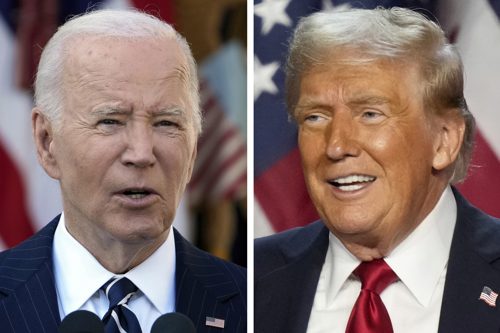 That Democrat-defending story angle was immediately disputed by Sen. Chuck Grassley, who was in possession of key whistleblower documents. He called the FBI investigation "defective from the start" because of the political motivations uncovered and made public.
This week, at a Senate Judiciary Committee hearing, Grassley slammed the FBI for its political spying op that went after lots of political enemies.
“Arctic Frost wasn't just a case to politically investigate Trump," Grassley stressed during the hearing.
"It was the vehicle," the Senator warned, "by which partisan FBI agents and DOJ prosecutors could achieve their partisan ends and improperly investigate the entire Republican political apparatus."
One of the targets was Turning Point USA, the youth-focused conservative organization founded and led by the late Charlie Kirk.
Also named were the Republican National Committee, Republican Attorneys General Association, and America First Policy Institute.
 The investigation also targeted well-known political figures such as Rudy Giuliani, Sidney Powell, and Stephen Miller, all allies of President Donald Trump.
“It’s critically important that we expose what was happening,” Rep. Harriet Hageman, a Wyoming Republican, said on Washington Watch Wednesday.
The hearings this week also focused on one DOJ official, FBI Assistant Special Agent in Charge Timothy Thibault. He was outed - and defended - in the Times story as the key person who greenlit the spying.
Whistleblower documents say Thibult acted outside the normal protocol for opening investigations -- drafting open-language himself and approving cases without usual oversight.
Thibault is said to have expressed urgency: Upon opening the case, according to testimony, he promised that the case would be “prioritized over all others in the Branch,” and that “it frankly took too long for us to open this (investigation).”
Rep. Hageman agrees with Sen. Grassley's description of a weaponized FBI that spied on its political enemies. That's because Operation Arctic Frost kept tabs on one of her political consultants during her 2022 GOP primary run against Rep. Liz Cheney in Wyoming’s at-large district.
"I have gone through the report that has been shared with us that identifies what this Operation Arctic Frost was intended to do. Shockingly enough, the Biden administration was surreptitiously surveilling my own consultant, which is just absolutely shocking,” she told show host Tony Perkins.
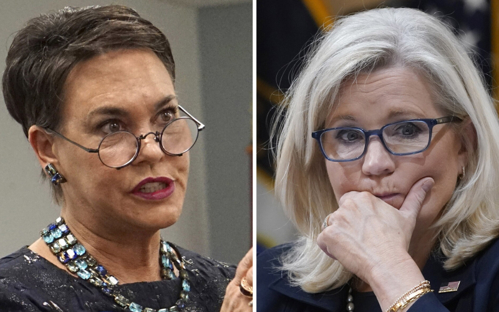 Hageman easily defeated Cheney, who was by then an ally of Democrats, with 66.3% of the vote.
In a related post on X, GOP leader Kylie Jane Kremer says she was "furious" after seeing her name listed among the FBI's political targets. She and her mother, Amy, lead the Trump-supporting group Women for America First.
"I have never committed violence. I have never broken the law. Yet I’ve been treated like a criminal simply for exercising my constitutional rights," she wrote.
Comparing the FBI to the Gestapo, Hitler's secret police force, Hageman says the Biden administration put the "full weight of the federal government" to investigate the Republican Party.
"Now you tell me why the FBI was sicced on Turning Point USA?" she demanded. "Charlie Kirk, what he was doing in his efforts at having a dialogue, and they targeted him with a federal investigation?”
There are options for Congress to work toward preventing future weaponization, Hageman said.
One is continued reform of the Foreign Intelligence Surveillance Act of 1978 (FISA).
What’s next for FISA
Last April Congress passed a two-year extension of Section 702 with some reforms including: more reporting requirements, stricter penalties for misuse of queries and a shorter reauthorization window to force continued oversight.
“During the last Congress, we made 56 different changes to FISA, and FISA is what was being used by the Obama administration to target the Trump campaign in 2016. They falsified documents in order to go into FISA to get the warrants against Carter Page so that they could spy on the Trump campaign in 2016,” said Hageman, a member of the House Judiciary Committee.
By definition, FISA is intended for use against foreign nationals.
“We made some substantial reforms to that, and we will continue to do so. It is up yet again for reauthorization in the spring of next year. I'm already working with Jim Jordan on the Judiciary Committee for additional reform,” she said.