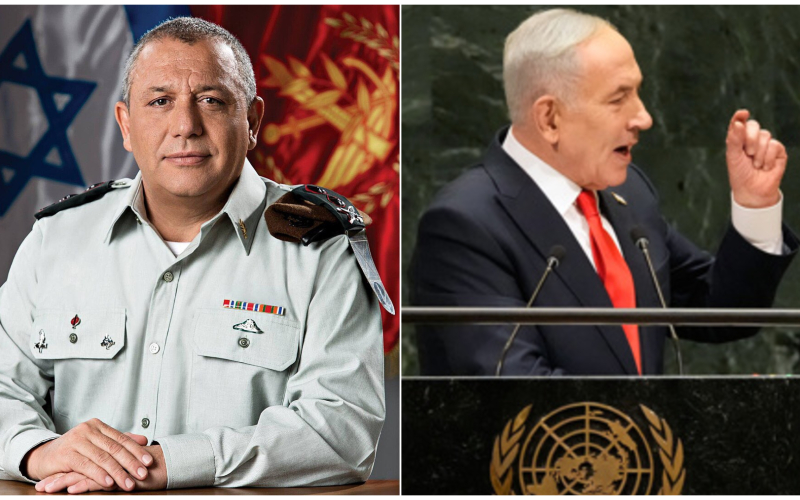



In an historic showing, Arab-led parties secured 19 seats in the Knesset in last week's elections.
Netanyahu, the Israeli prime minister, was quick to charge election fraud among the Arab parties.
“The elections in the State of Israel were stolen by Arab parties that support terrorism and the elimination of the Jewish state through serious criminal offenses of bribery, threats, violence, forgeries, and the use of prohibited software to mobilize voters,” Netanyahu wrote in a lengthy X post.

Netanyahu says the Likud party is providing authorities with evidence of “thousands” of envelopes stuffed with cash, threats of violence against polling station members and many other voting discrepancies.
“This is a serious blow to Israeli democracy and the voting rights of Israeli citizens. The law enforcement agencies must act with an iron fist and in an immediate manner,” Netanyahu wrote.
For now, the Arab parties, are being viewed as possible kingmakers in the weeks of difficult negotiations that lie ahead.
Netanyahu remains prime minister in the meantime, but he’s unlikely to start any bold foreign policy initiatives before a clearer election picture emerges.
Among his media responsibilities, Joel Rosenberg is also a former advisor to Netanyahu. During an appearance on American Family Radio, he pointed out that not all the Arab parties are alike.
"Now, one of those parties is sort of a moderate Arab party that has a Jewish former IDF general as the number two and is trying to become more mainstream to become part of the Israeli society. The others are a mixture of communist and sort of radical Islamist parties, but they're citizens of Israel, so they have the right to vote."
Ambition has limits
Rosenberg doesn't think opposition leader Gadi Eisenkot would make a deal with the Arab parties to obtain the 61 seats needed to control the Knesset.
“If he went with all the Arab parties' 19 seats, he would be well over 60, close to 70 with that group. But 12 of those 19 seats on the Arab side are communist and radical Islamist, so no Israeli Jewish Zionist is going to make a national government with communist and radical Islamists.
You might make a government with that moderate Arab party, which is seven seats, but even seven added to Eisenkot's 48, that doesn't get you there."
That is why Rosenberg believes moving forward, the Netanyahu and Eisenkot blocs need to form a National Unity government.
“What would be far preferable is that Netanyahu, Eisenkot, and some of the other parties form a national unity government and say, ‘Look, we don't agree on a number of things, true, but we have to face Iran. We have to finish that off. We have to work with the Americans on that,’” Rosenberg said.