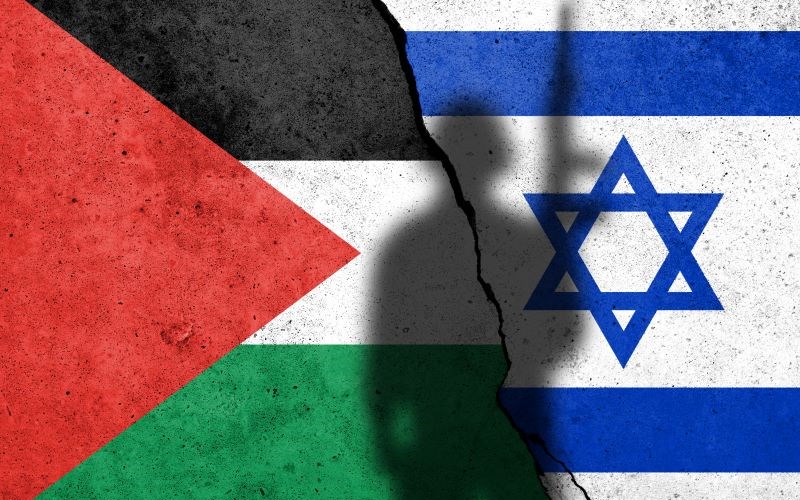



On Oct. 7, 2023, Hamas and other Palestinian terrorist groups breached the Gaza-Israeli barrier using explosives, bulldozers, motorized paragliders and boats to launch a large-scale terrorist attack on more than 20 communities, military posts and a music festival.
The carnage resulted in 1,200 deaths, mostly civilians, and the abduction of more than 250 people.
It was the deadliest single day for Israel since its founding.
The massacre was so horrific that seasoned war correspondents were shocked into silence when the Israeli government showed them the raw footage.
"For 46 minutes, we sat in stunned silence watching video filmed by Hamas and filmed by their victims," an NBC News reporter relayed.
Israel has not released that footage to the public out of a sense of propriety, but the NBC News reporter described what he saw:
"A terrorist throwing a grenade into a bomb shelter where an Israeli father is shielding his two young sons. The blast kills the father and wounds the little boys. One of them howls, 'Why am I alive?' and tells his brother, 'I think we're going to die.'"
As news of the attack started breaking around the world that morning, details emerged slowly and underreported, which is common with breaking news.
Israeli officials initially reported "multiple injuries, some of them serious, and at least one fatality."

Dr. Robert Jeffress, senior pastor of First Baptist Church in Dallas, was in New York that day, and as the news spread, the antisemitism that would soon consume the Left was already taking root.
"The streets were filled with people supporting what happened in the attack against Israel," he remembers.
He says the only way the Left can justify its antisemitism is to downplay or ignore the gruesome truth.
"It is just unbelievable to me the number of people who do not support Israel's right to defend herself against those who would sexually assault babies and tie entire families together while they burn them alive," Jeffress laments.
Bob Maginnis, president of Maginnis Strategies LLC, believes Israel's internal guard was down.
"They were not as vigilant as they had been prior to that," he observes. "There were certainly warnings that Hamas was building up to that activity, and I think Israel ignored, to their own detriment, what was going on."
But the attack spurred the Israelis to attack the terrorists with a vengeance.

"I think it made Israel far more receptive to the activities that we've been talking about for some time vis-à-vis Iran, that Iran has never given up its aim to destroy Israel, and Hamas was one of those indicators," Maginnis submits.
He points out that these Islamic conflicts go back centuries, arguably to 700 A.D., when "Muhammad came out of his cave in the Medina area and then proclaimed himself a prophet."
"So, there's nothing that's really radically new here," Maginnis concludes.