



President Donald Trump said this week that negotiations with Iran are continuing and suggested the two sides could reach an agreement “within a week.”
It’s hard to picture an agreement when considering the news of the day.
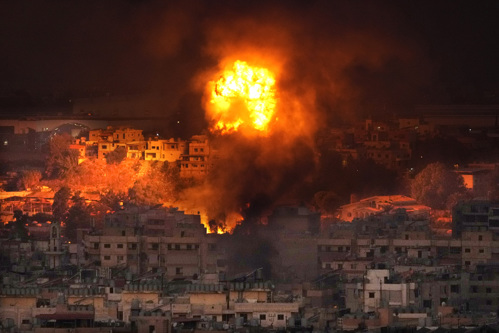 Direct talks between the United States and Iran appear to remain stalled, as Tehran continues to insist that any agreement on its nuclear program must explicitly include a ceasefire for its proxies in Lebanon and Gaza.
While U.S. mediators have attempted to separate the issues to secure a deal on nuclear restrictions, Iranian officials have rejected this approach, linking regional de-escalation directly to sanctions relief.
Israel and Hezbollah fighting continued in southern Lebanon late Monday even after Trump, in response to Iranian demands, said he’d spoken with both Israel and Hezbollah, and the two sides had “agreed that all shooting will stop.”
Later Monday Trump said in a Truth Social Post that Netanyahu agreed to call off a planned “major raid” of Beirut, while Netanyahu wrote on X that Israel’s status in its war with Hezbollah depends on Hezbollah.
“Tonight, I spoke with President Trump and told him that if Hezbollah does not cease attacking our cities and citizens — Israel will attack terror targets in Beirut. This stance of ours remains unchanged.”
An Aixos report describes a profanity-laced dress down of Netanyahu from Trump in a phone call in which the president expressed frustration that Israel's military actions against Hezbollah complicate U.S. negotiations with Iran.
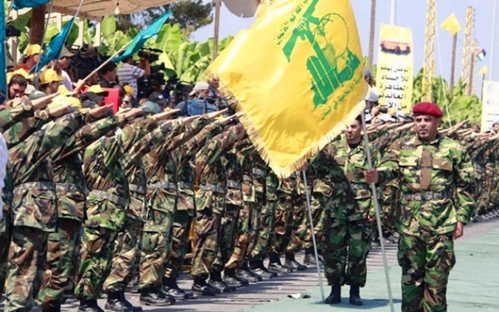 Israel began a new round of talks with Lebanon, Hezbollah’s host government, on Tuesday, The Times of Israel reported.
The uncertainty of talks between the U.S. and Iran is “putting Prime Minister Netanyahu in an awkward position,” Mitchell told show host Tony Perkins.
Political opposition in Israel say Netanyahu is acting as a Trump puppet and giving up Israel’s sovereignty, Mitchell said.
Netanyahu, meanwhile, sees an opportunity to rid Israel of the danger across its northern border.
“Here in Israel, soldiers are being killed. Residents of the north are getting attacked, and so they want to see that this could be something where they could finally finish off Hezbollah,” Mitchell said.

Israel has made significant gains into southern Lebanon, including its capture of Beaufort Castle, a Crusader-era fortress built in the 12th Century.
Beaufort Castle sits atop a 700-meter ridge overlooking the Litani River valley, providing Israeli forces with fire-control views across southern Lebanon and into northern Israel.
From this position, the IDF can monitor movement along critical highways, observe areas between the Litani and Zahrani rivers, and track activities in towns like Taybeh, Deir Seryan, and Qantara. Defense Minister Israel Katz described it as "one of the most important strategic points for defending the settlements of the Galilee."
Mitchell believes the U.S. is considering its options with Iran.
“I think right now the administration is counting the political cost, the military cost, and the cost of even allowing the regime to survive, to maybe one day try to resurrect their nuclear program,” he said.
For Israel, it’s not only about nukes
Nuclear weapons aren’t Israel’s only concern relative to Iran.
Iran has demonstrated a maximum confirmed missile range of approximately 3,800 to 4,000 kilometers (2,360–2,485 miles) through combat operations its own testing.
The most significant proof of long-range capability occurred in March, when Iran fired ballistic missiles at Diego Garcia, a remote British-American military base in the Indian Ocean located roughly 4,000 km from Iranian launch sites.
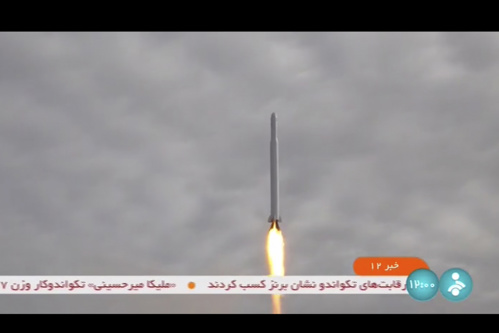 While U.S. forces intercepted the projectiles, the attack confirmed Tehran possesses Intermediate-Range Ballistic Missile (IRBM) capabilities far exceeding its previously stated 2,000 km limit.
Recent satellite imagery analyses reported by CNN and others say Iran has been actively digging out and reopening underground missile facilities that were blocked during the war. According to those reports, Iran has already restored access to roughly 50 of 69 tunnel entrances at 18 underground missile sites.
“There’s been a report that many of the ballistic missiles weren't harmed, that Iran is right now digging out many of those underground facilities that had been buried by the Operation Epic Fury and Operation Roaring Lion. So, to that point, that represents also an existential threat here to Israel,” Mitchell said.