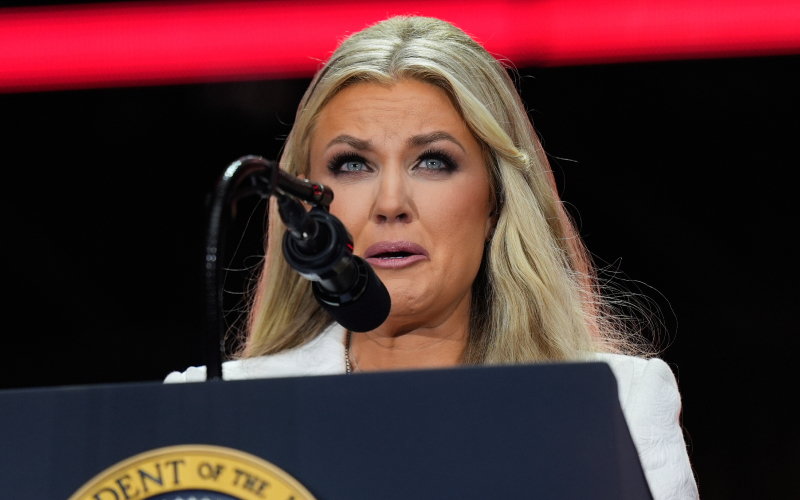


Kira Davis, an author and conservative social media commenter, had a five-hour layover. It was Palm Sunday, and what better way to use her time than in prayer?
But Davis said on American Family Radio Monday that her time at Dallas-Fort Worth International Airport left her feeling like she’d stepped into a mosque, not a place of worship for Jesus Christ.
The 1990s saw a boom period for airport chapels and also a shift in focus from Christianity to what has been described as “interfaith” spaces.
These are rooms meant for meditation and reflection that may not be labeled chapels.
“The whole idea of interfaith anything is an abomination in the first place. What happened to me is exactly what will happen to Christianity if we insist on letting our spaces become, quote, interfaith or multicultural. We have to stop with this,” Davis told show host Jenna Ellis.
In the 1950s and 1960s there were a handful of chapels at U.S. airports, starting with Logan International in Boston.
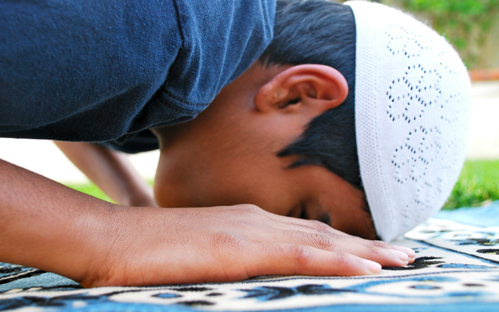 In the 1970s and 1980s chapels were largely Catholic and Protestant, and they existed primarily for airport workers to worship while powering an industry that knows no days off.
Printouts of the Muslim prayer timetable, and the 2025 Catholic and Protestant Christmas season Mass and worship service schedule, were tacked by the door of the chapel at Chicago’s O’Hare Airport. That is where about 50,000 people work and 80 million annually fly in or out — last year.
On Palm Sunday, Davis found she was greatly outnumbered at DFW, and the predominantly Muslim clientele were hostile to her presence.
It’s no secret that “Texas is struggling with their Islamic population,” Davis said.
A state court judge in late March issued a Temporary Restraining Order against a municipal utility district seeking to service “The Meadow,” a proposed Islamic housing development near Dallas. The Meadow began as the East Plano Islamic Center near Dallas.
Plans include a residential community with a mosque, school, and other amenities catering to Muslim families to be built on more than 400 acres in unincorporated parts of Hunt and Collin counties.
A trial is set for November.
Texas, Michigan similarities
Davis compared the red Lone Star State to Dearborn, Michigan where roughly 54.5% of residents among the 110,000-population city report Middle Eastern or North African ancestry. Dearborn is often described as having the largest concentration of Muslims in the U.S.
“This is a problem that a lot of people have not been focusing on, but we absolutely need to because Islam spreads. It is not – it is a religion of conquerage, so it's not a religion that comes to live in peace,” she said.
Davis knew from previous travels that DFW had reopened three chapels inside the terminal.
She entered one and found it void of crosses or any type of Christian symbolism. Paintings on the wall were “vaguely Islamic” although they were meant to represent houses of worship, Davis said.
She left and went to a second chapel.
Again “there were no crosses, no Christian symbols but lots of prayer rugs, hundreds, drawers filled with prayer rugs, Qurans and a nice convenient sign on the wall that pointed you to Mecca,” Davis said.
One Muslim gentleman, shoes off, was in the chapel at the time.
“He was not happy to see me. He eventually started his prayers and was joined by another gentleman. More and more came, and all of them were very upset that I was there,” Davis said.
The Muslim men began conversing loudly about Davis, she believes.
“I felt as though they were trying to wait me out. They were upset that there was a woman in there or anybody in there at all, and they were trying to wait me out. So one wouldn't leave until the next one came.”
Won’t back down
Davis refused to leave.
“I felt intimidated. This is absolutely ridiculous, I thought. I know it was supposed to be interfaith, but it wasn’t. It was a mosque,” she said.
Davis, with time on her side, waited an hour for the chapel to empty.
She faults the airport for the experience. Christians should not be expected to occupy a worship space with Muslims who deny that Jesus Christ is the son of God, deny the trinity, and deny the crucifixion and resurrection.
 “There's no such thing as interfaith, and we need to stop with this ridiculousness. Christians and Muslims cannot worship together. When I was in that chapel, those men knew it. I knew it. That was the only thing we all agreed on. We all knew we weren't supposed to be in that space together,” Davis said.
The difference is too many Christians will forfeit the space, she said.
“Muslims don't care. They will push you out. Christians will step aside, and we need to stop stepping aside. I just had enough, and I thought I'm not going to step aside. I'm not going to let the gospel step aside for this,” Davis said.