


This research was collected from July to August of 2025 and replicates a previous study in June 2023. Latest results show a decline in church attendance.
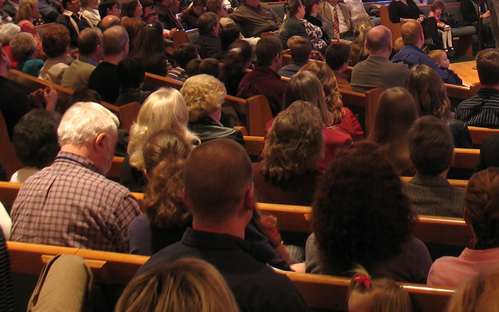
The recent study found that 65% of churchgoers attend most weeks, which is a decline from 72% in the previous survey.
This survey covers wide range of topics for churchgoers including seven cornerstone beliefs of a biblical worldview and the responses to it. It includes topics such as the human condition, life after death, and purpose of life. Other sections of the survey include politics, election, and voting; abortion; family and social issues; and Israel.
Dr. George Barna is a senior research fellow at FRC and the director of research at the Cultural Research Center at Arizona Christian University. He led the research of the study.
In a Washington Watch interview this week, Barna told show host Tony Perkins what concerns him most, more than church attendance, is that the church is losing ground on the abortion battle.
“We've got more and more Christians who either don't care or aren’t well informed about what the Bible teaches about it because we find that fewer of them are calling themselves pro-life,” reports Barna. “Fewer of them say that the Bible is clear and decisive when it talks about issues related to abortion, stands on abortion.”
Culture confusion
Compared to 63% in 2023, only 43% of regular church attenders call themselves pro-life. Among the rest, 35% identify as pro-choice, 7% do not know where they stand, and 15% lean one of the two ways but could be convinced otherwise.
Barna says that the culture really seems to be taking a hit on people’s hearts and minds. Multiple topics that should be understood by Christians are met with confusion from consistent churchgoers.

“Some things that concern me are the fact that a majority of churchgoing Christians don't even know how to define family. And there wasn't as much support for Israel as you might have expected from regular churchgoers. In terms of worldview, we're also seeing people becoming more confused, less informed, and therefore not really thinking like Jesus,” states Barna.
Critics express that Christians almost have a syncretic faith because they have merged church with cultural trends. In fact, the study states that 12% of regular churchgoers have another religious affiliation along with Christianity.
Barna agrees and believes that it is a large part of the problem. This added to the fact that people go to church and are not coming out with anything pointing them toward a biblical worldview or biblical discipleship.
The question now is, why do they go?
“They like being with other people who they think are good people. One of the things that our research is showing is that 70% of regular churchgoers, 70% of people who are self-identified Christians, 72% of theologically identified born-again Christians say that all people are basically good, which of course is a direct contradiction of scripture,” says Barna. “That's just a sign, an indicator of what we're putting up with now, where people are not getting the kind of teaching and the kind of accountability that they need.”
Critics point out how church attendance is rising post-Covid, but it does not seem like people are getting a consistent, systematic teaching of God and its application.
“What we found is that sin is rarely talked about in the sermons -- 3% of sermons a few years ago when that was tracked. We don't want to deal with those things. What we are providing people more often than not are self-help lessons. That's not bad, but it's not necessarily moving people closer to Christ,” states Barna.
He states that part of the problem is that the church is not turning out biblical disciples. According to Barna’s personal research, 3% of adults meet Jesus’ six criteria of what makes somebody a real disciple. He says this is detrimental because the church is going out and reproducing people who are not disciples.
“We're reproducing attenders, but we're not reproducing disciples of Jesus,” says Barna.
Wanted: More bold pastors
Despite this news, Barna says there are upsides to the study. While he says it’s not a perfect picture and the numbers are down in some areas, churches can work with these results.
 “Two out of three people know what the definition of a legitimate marriage is — one man married to one woman. We found that six out of 10 say that the Bible is clear and decisive in its teaching regarding religious liberty, and slightly over half said that it's clear in its teaching about the morality regarding abortion,” reports Barna. “We found that six out of 10 people have an orthodox biblical view of God, and a little bit more than half say that the Bible is the true word of God.”
He believes that the issue for church leaders and pastors not having discipleship may be one of boldness; Many of them base success on such things as church attendance, number of programs, etc.
Barna states that Jesus did not die for any of that, and it is time for pastors to stand up and preach what it actually looks like to be a follower of Christ, even if its uncomfortable.
“If you're here, we believe you want to be a follower of Christ. Here's the recipe that Jesus gave us for that. I'm going to give it to you. Let's run with it,” argues Barna.