

BOA’s alleged wrongdoing included failing to report $5 billion in suspicious transactions including $1 billion linked to national security risks like Chinese money laundering networks and illicit activity along the U.S.’ southwest border.
There were 475 apparent violations of U.S.-ordered sanctions against other countries such as Russia and Iran.

Apparent misdeeds by Bank of America didn’t end there.
A day later it was among nine of the nation’s largest banks named in a report by the Office of the Comptroller of Currency (OCC) that found the banks participated in what has become known as “de-banking,” the practice of denying or limiting financial services based on political or religious beliefs or lawful business activities.
“These are things that happen in communist regimes or fascist regimes where the government is playing politics in an aggressive way, much like the IRS did many years ago when they were denying the opportunities for equal justice for Christian groups and other conservative groups,” House Republican Mike Haridopolos, a member of the House financial services committee, said on “Washington Watch” Wednesday.
Learning a lesson from Lerner
During the Obama administration, the IRS's Exempt Organizations Unit — led by Lois Lerner — used politically charged keywords like "Tea Party," "Patriot," and "9/12" to flag applications for 501(c)(4) tax-exempt status from conservative organizations for heightened scrutiny.
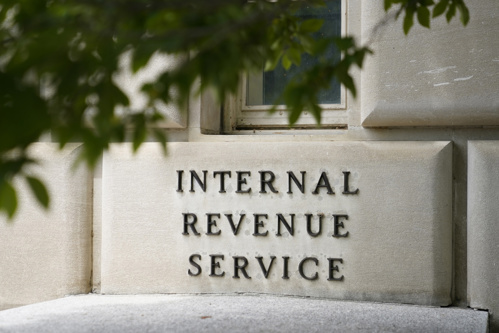 When that attempt to slow walk the groups was uncovered, Lerner blamed "rogue" low-level IRS agents. Those agents later testified to Congress they were following orders from Washington.
Conservative groups were subjected to demands for donor lists, extraordinary documentation, and delayed or denied tax-exempt status that comparable liberal organizations did not face. The IRS Inspector General confirmed the targeting in May 2013, and the House Oversight Committee later found conservative groups were "systematically targeted."
Fast forward, the OCC received almost 100,000 debanking complaints compiling 420,000 pages of documents.
Christians were targeted many times, according to a filing with the Securities and Exchange Commission (SEC).
In April 2023, Bank of America closed the account of Indigenous Advance Ministries, a Christian organization that provides food, clothing, and other needs to orphans and widows in Uganda.
 The bank also closed the accounts of a Memphis, Tennessee, church that donates to Indigenous Advance and a separate business that provides jobs to impoverished Ugandans.
The bank provided only vague reasons for the closures, claiming that the organization “exceeded its risk profile.” It declined to provide further specificity around its decision after repeated requests by Indigenous Advance Ministries.
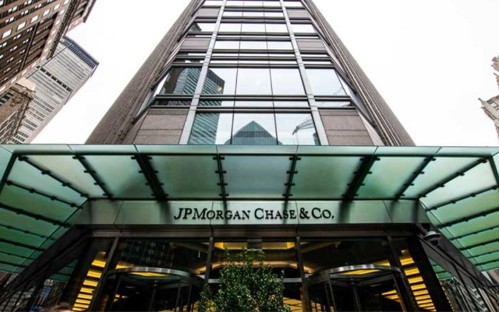
JPMorgan Chase, America’s largest bank, has proven to be one of the worst offenders, the filing states. In 2022, JPMorgan Chase closed the bank account of the nonprofit, National Committee for Religious Freedom, founded by former U.S. Ambassador Sam Brownback.
Chase refused to provide a clear explanation for why the account had been closed in the first place and insisted that it would only consider re-opening the account if the nonprofit agreed to disclose confidential donor information and detailed information about its activities.
Word salad defense for poor choices
The banks said decisions were made based on reputation risk concerns, but the report found the banks lacked clear, objective risk-based criteria. They were instead leaning on political considerations, public opinion, and social pressure in cutting ties with Christians and conservatives.
“This is why we had to go in to look at the deep state and why we need to have this transparency in government, because you see these actors will go out within these agencies, push their political agenda, much like we saw with even programs like USAID where they were using money for their own political purposes as opposed to doing what they're supposed to do, which is simply following the law,” Haridopolos told show host Tony Perkins.
USAID was officially shut down on July 1, 2025, after being exposed by the now-defunct Department of Government Efficiency (DOGE).
Its operations have been absorbed into the State Department.
Taxpayers need to remain on alert, Haridopolos said.
“This is why we need to be aggressive and again, add transparency to where every dollar is spent.”